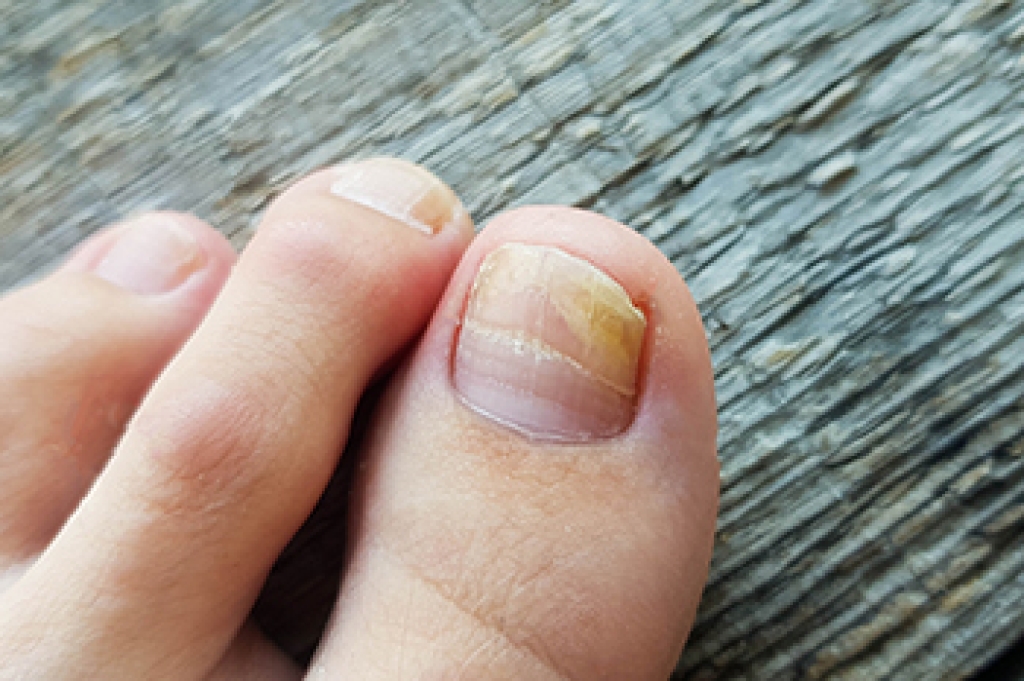
Toenail fungus, also known as onychomycosis, is a progressive infection caused by fungi that thrive in warm, moist environments. It typically begins when microscopic organisms enter through small cracks in the nail or surrounding skin. In the early stage, the infection may appear as a small white or yellow spot under the nail surface. At this point, symptoms are mild and often overlooked, with little to no discomfort. This stage can last several weeks to a few months, depending on hygiene, footwear, and immune response. Early identification is important because treatment is more effective before the infection spreads deeper into the nail.
As the condition progresses into the moderate stage, visible changes become more noticeable. The nail may thicken, discolor, and develop a brittle or crumbly texture. Yellow-brown staining and slight lifting of the nail from the nail bed are common. Mild discomfort may develop, especially while wearing shoes. This stage can persist for several months and is often when patients begin seeking care. Without treatment, the fungus continues to spread, making the nail harder to manage and increasing the risk of complications.
In the advanced stage, toenail fungus can cause significant nail deformity and discomfort. The nail may become severely thickened and dark in color. In some cases, the nail may partially detach from the nail bed or emit an unpleasant odor. Pain may occur with walking or pressure, especially in tight footwear. This stage may take a year or longer to fully develop and often requires more aggressive treatment. The infection can also spread to other nails or surrounding skin if not properly addressed.
Risk factors play a major role in fungal progression. Individuals with diabetes, weakened immune systems, or poor circulation are more susceptible. Wearing tight-fitting shoes, excessive sweating, and walking barefoot in communal areas increase exposure. Older adults are at higher risk due to slower nail growth and reduced immunity. Proper foot hygiene and early care can slow or prevent progression. If you notice changes in your toenails, it is strongly suggested that you consult a podiatrist for effective treatment solutions, which may include prescribed medication.
For more information about treatment, contact Jeffrey Rosenblatt, DPM of New York. Our doctor can provide the care you need to keep you pain-free and on your feet.
Toenail Fungus Treatment
Toenail fungus is a condition that affects many people and can be especially hard to get rid of. Fortunately, there are several methods to go about treating and avoiding it.
Antifungals & Deterrence
Oral antifungal medicine has been shown to be effective in many cases. It is important to consult with a podiatrist to determine the proper regiment for you, or potentially explore other options.
Applying foot powder on the feet and shoes helps keep the feet free of moisture and sweat.
Sandals or open toed shoes – Wearing these will allow air movement and help keep feet dry. They also expose your feet to light, which fungus cannot tolerate. Socks with moisture wicking material also help as well.
If you have any questions please contact our office located in Brooklyn, NY . We offer the newest diagnostic and treatment technologies for all your foot and ankle needs.
