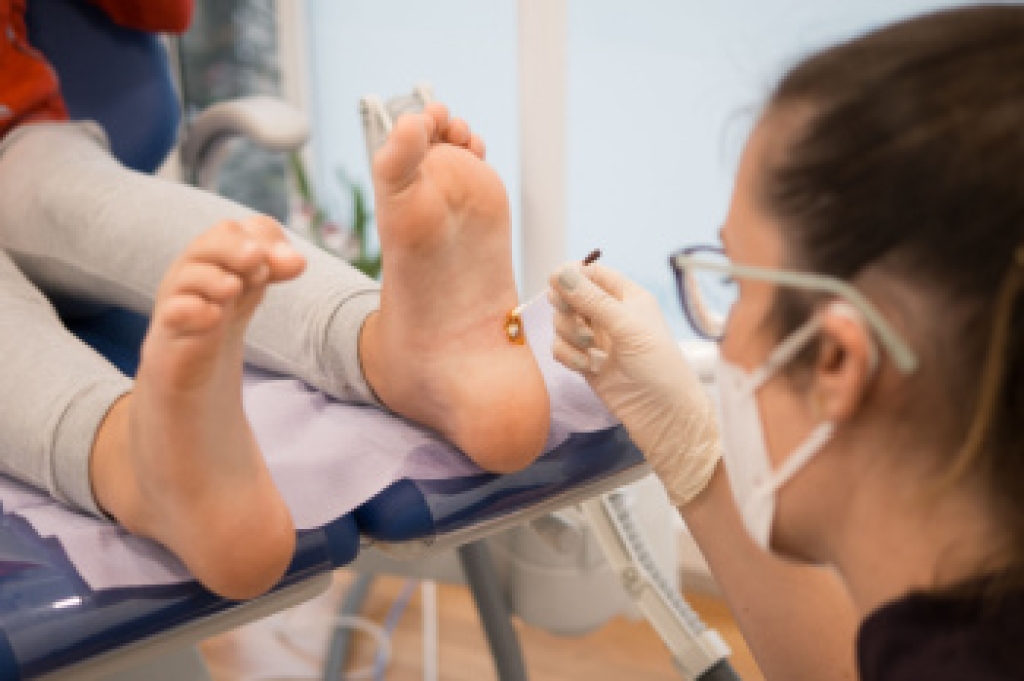
Plantar warts are growths that develop on the bottom of the foot due to a viral infection in the skin. They often appear as small, rough areas with tiny black dots and may feel tender when walking or standing. Unlike other warts, they can grow inward because of pressure from body weight, creating a sensation similar to stepping on a pebble. The virus thrives in warm, moist environments, so it is commonly spread in locker rooms, around pools, or shared surfaces. A podiatrist can identify plantar warts through examination and may gently trim the area to reduce pressure and confirm the diagnosis. Treatment options include topical medications, freezing, or other in-office procedures designed to remove the wart and reduce recurrence. Early care can help prevent spread and discomfort. If you have plantar warts, it is suggested that you make an appointment with a podiatrist.
Plantar warts can be very uncomfortable. If you need your feet checked, contact Jeffrey Rosenblatt, DPM from New York. Our doctor will assist you with all of your foot and ankle needs.
About Plantar Warts
Plantar warts are the result of HPV, or human papillomavirus, getting into open wounds on the feet. They are mostly found on the heels or balls of the feet.
While plantar warts are generally harmless, those experiencing excessive pain or those suffering from diabetes or a compromised immune system require immediate medical care. Plantar warts are easily diagnosed, usually through scraping off a bit of rough skin or by getting a biopsy.
Symptoms
- Lesions on the bottom of your feet, usually rough and grainy
- Hard or thick callused spots
- Wart seeds, which are small clotted blood vessels that look like little black spots
- Pain, discomfort, or tenderness of your feet when walking or standing
Treatment
- Freezing
- Electric tool removal
- Laser Treatment
- Topical Creams (prescription only)
- Over-the-counter medications
To help prevent developing plantar warts, avoid walking barefoot over abrasive surfaces that can cause cuts or wounds for HPV to get into. Avoiding direct contact with other warts, as well as not picking or rubbing existing warts, can help prevent the further spread of plantar warts. However, if you think you have developed plantar warts, speak to your podiatrist. He or she can diagnose the warts on your feet and recommend the appropriate treatment options.
If you have any questions, please feel free to contact our office located in Brooklyn, NY . We offer the newest diagnostic and treatment technologies for all your foot care needs.
