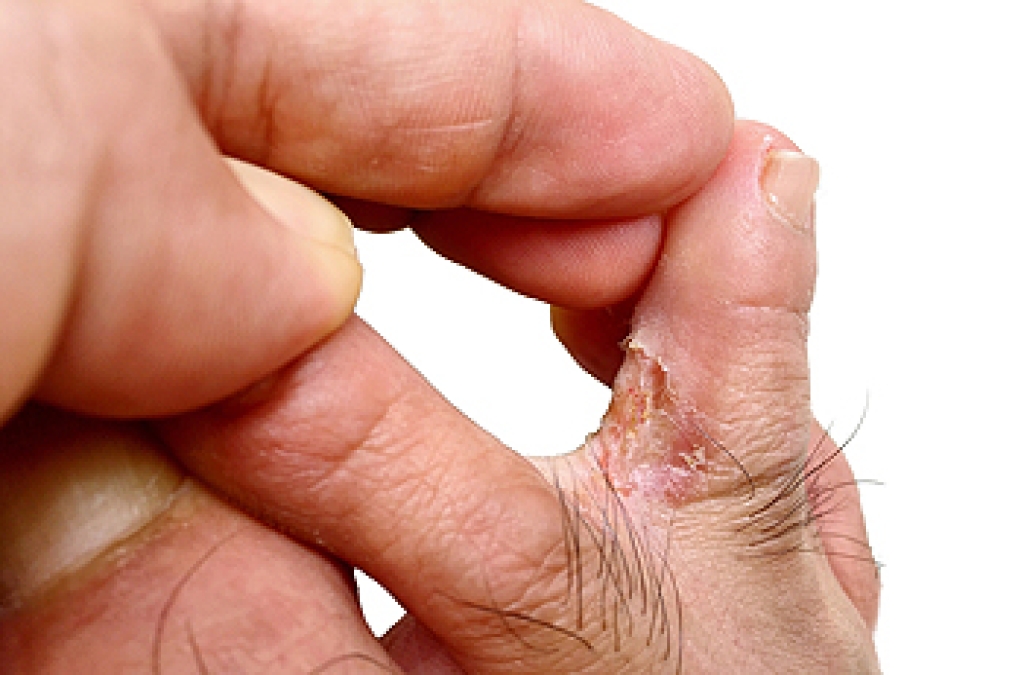
Athlete’s foot is a contagious fungal infection that affects the skin of the feet. It usually begins between the toes, where warmth and moisture create an ideal environment for fungus to grow. One of the first symptoms is itching between the toes. Other symptoms are peeling skin, scaling, or small cracks in the affected area. The skin may also appear red and irritated, becoming tender and uncomfortable when wearing shoes. People who wear closed-toe shoes, have sweaty feet, or walk barefoot in public locker rooms and pool areas have a greater risk of developing athlete’s foot.
As the athlete’s foot infection progresses, the fungus can spread to the soles of the feet and cause dry, flaky skin. Some people develop a burning sensation or stinging discomfort. Others notice pale, wrinkled skin after the feet have been exposed to moisture. Small blisters can also form, causing further irritation. In more advanced cases, the skin may crack deeply enough to become painful when walking. Open sores can develop in severe infections. These sores increase the risk of additional skin problems and can make daily activities more difficult.
A podiatrist can recognize athlete’s foot by examining the skin and identifying the pattern of the infection. Treatment depends on the severity of the condition and may include prescription antifungal medication to eliminate the fungus. When the infection has spread to the toenails, treatment can be more extensive because nail fungus is harder to clear. Keeping the feet clean and dry also helps reduce the chance of future infections. Prompt care can relieve discomfort and help prevent the infection from spreading. If you believe you may have an athlete's foot infection, it is suggested that you make an appointment with a podiatrist for an exam and diagnosis.
Athlete’s foot is an inconvenient condition that can be easily reduced with the proper treatment. If you have any concerns about your feet and ankles, contact Jeffrey Rosenblatt, DPM from New York. Our doctor will treat your foot and ankle needs.
Athlete’s Foot: The Sole Story
Athlete's foot, also known as tinea pedis, can be an extremely contagious foot infection. It is commonly contracted in public changing areas and bathrooms, dormitory style living quarters, around locker rooms and public swimming pools, or anywhere your feet often come into contact with other people.
Solutions to Combat Athlete’s Foot
- Hydrate your feet by using lotion
- Exfoliate
- Buff off nails
- Use of anti-fungal products
- Examine your feet and visit your doctor if any suspicious blisters or cuts develop
Athlete’s foot can cause many irritating symptoms such as dry and flaking skin, itching, and redness. Some more severe symptoms can include bleeding and cracked skin, intense itching and burning, and even pain when walking. In the worst cases, Athlete’s foot can cause blistering as well. Speak to your podiatrist for a better understanding of the different causes of Athlete’s foot, as well as help in determining which treatment options are best for you.
If you have any questions please feel free to contact our office located in Brooklyn, NY . We offer the newest diagnostic and treatment technologies for all your foot and ankle needs.
