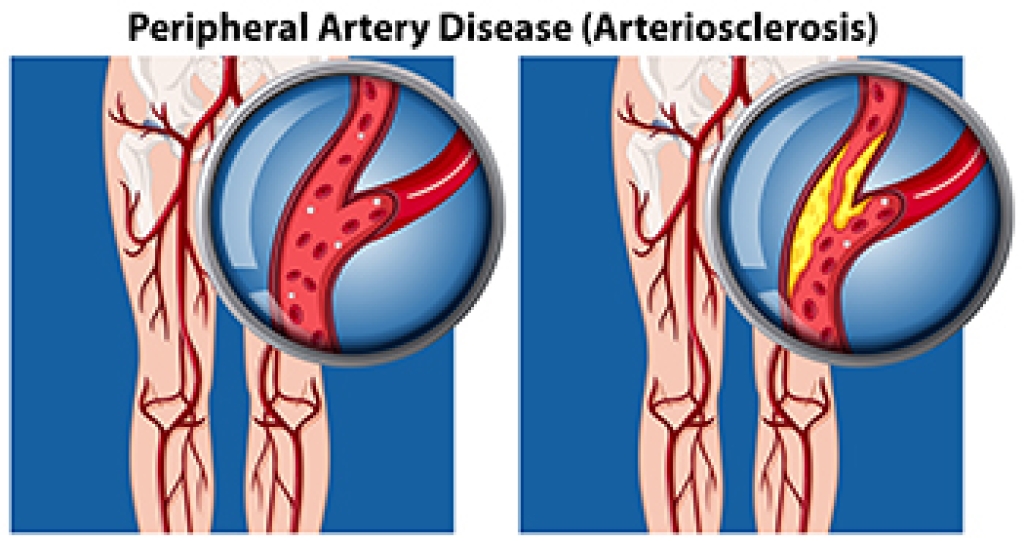
Peripheral artery disease, or PAD, develops when narrowed arteries reduce blood flow to the legs and feet. Fatty deposits inside these blood vessels are usually responsible for this narrowing. Without enough oxygen-rich blood, the feet may become painful and slow to heal. Signs include cramping in the calves when walking, cold feet, and a weak pulse in the lower legs. The skin may look pale, shiny, or bluish. Toenails can grow slowly, and hair on the feet or legs may decrease. As the condition advances, some patients also develop numbness or pain while resting.
Several factors raise the risk of developing PAD. Smoking, diabetes, and high blood pressure are major concerns. High cholesterol and older age can also increase risk. Because reduced circulation limits healing, a small blister or cut can become a serious wound. An untreated wound may develop an infection, tissue damage, or limb loss. People with diabetes face added danger because nerve damage can make an injury difficult to feel. Changes should not be ignored, even when they seem minor. A sore that does not heal, a change in skin color, or sudden foot pain requires prompt medical attention.
A podiatrist can examine the feet for circulation problems and check the skin, nails, and pulse. The examination can also identify wounds that require careful treatment. Tests that compare blood pressure at the ankle and arm can help measure blood flow. A podiatrist can clean and protect wounds, remove damaged tissue, and reduce pressure on sore areas. Regular foot examinations can help detect problems before they become severe. A medical team approach can help manage PAD and protect foot health. In severe cases, procedures or surgery may be considered to improve circulation. If you have symptoms of peripheral artery disease, it is suggested that you schedule an appointment with a podiatrist for a diagnosis and appropriate treatment.
Peripheral artery disease can pose a serious risk to your health. It can increase the risk of stroke and heart attack. If you have symptoms of peripheral artery disease, consult with Jeffrey Rosenblatt, DPM from New York. Our doctor will assess your condition and provide you with quality foot and ankle treatment.
Peripheral artery disease (PAD) is when arteries are constricted due to plaque (fatty deposits) build-up. This results in less blood flow to the legs and other extremities. The main cause of PAD is atherosclerosis, in which plaque builds up in the arteries.
Symptoms
Symptoms of PAD include:
- Claudication (leg pain from walking)
- Numbness in legs
- Decrease in growth of leg hair and toenails
- Paleness of the skin
- Erectile dysfunction
- Sores and wounds on legs and feet that won’t heal
- Coldness in one leg
It is important to note that a majority of individuals never show any symptoms of PAD.
Diagnosis
While PAD occurs in the legs and arteries, Podiatrists can diagnose PAD. Podiatrists utilize a test called an ankle-brachial index (ABI). An ABI test compares blood pressure in your arm to you ankle to see if any abnormality occurs. Ultrasound and imaging devices may also be used.
Treatment
Fortunately, lifestyle changes such as maintaining a healthy diet, exercising, managing cholesterol and blood sugar levels, and quitting smoking, can all treat PAD. Medications that prevent clots from occurring can be prescribed. Finally, in some cases, surgery may be recommended.
If you have any questions, please feel free to contact our office located in Brooklyn, NY . We offer the newest diagnostic and treatment technologies for all your foot care needs.
